 {# Overlay logo in the middle of the banner, no layout shift #}


From Stockport to Marseille to MLS Cup - and into the front office
Tyrone Mears: From Fullback to President of Soccer


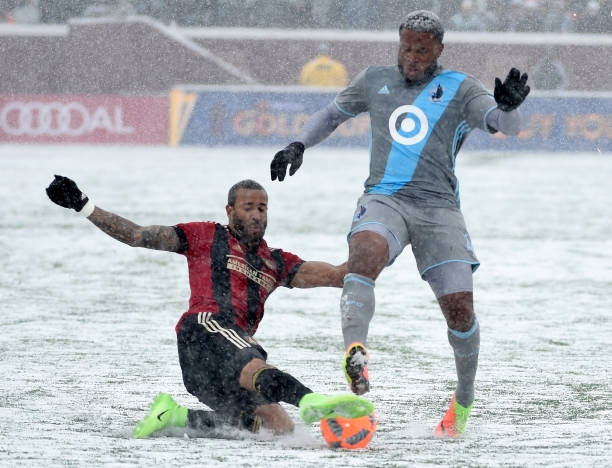
A Career Built on Usefulness, Not Spotlight
By the time Tyrone Mears was named President of Soccer for Fort Lauderdale United FC, his playing career was far enough in the past to invite simplification.
That would be a mistake.
Mears’ career does not lend itself to highlight reels. Instead, it reads as a record of trust. Across two decades, multiple leagues, and several football cultures, he kept being selected by clubs that needed reliability more than spectacle. He was rarely the point of a system, but he was repeatedly trusted inside systems that mattered.
Those selections were not accidental. They followed a pattern - one built on availability, adaptability, and an ability to operate within structure rather than above it. Over time, that same pattern carried him from the right side of a back line into roles that required broader responsibility and longer vision.
That trajectory also helps explain why Major League Soccer, and later Atlanta United, made sense when they did. By the time Mears arrived in North America, he was no longer chasing the center of a team. He was offering something else.
To understand how that career took shape, it helps to begin well before MLS, and well before leadership or legacy became part of the conversation.
Stockport, Speed, and the First Fork in the Road
Mears grew up in Stockport and the surrounding Greater Manchester area, where organized sport was less a single-track pursuit than a set of overlapping possibilities. Football would eventually define his career, but it was not the first discipline to do so, nor the one that initially appeared most certain.
Rugby league came first. By his early teens, Mears was already embedded in the professional structure of the sport, signing a long-term agreement with Warrington Wolves stretching into adulthood.
“I signed a contract with Warrington Wolves running from when I was 12 until I was 21. That was where I thought my career was going.” Tyrone Mears, The Guardian, November 4, 2009
Mears did not begin to take football seriously until his early teenage years, playing at school level while still committed to rugby league. That overlap proved decisive. While representing Oldham Schools at Under-14 level, he came to the attention of Manchester City scouts.
The process that followed was not automatic. City were not recruiting a polished footballer, but a physical profile, and extracting him from an existing professional contract required persuasion - not just of the player, but of his family.
“… we went to see him playing for Oldham Schools at Under-14 level. The problem was that he had a schoolboy contract and a professional contract guaranteed at Warrington Rugby League Club. … He was a fantastic rugby league player and could be playing Super League now. That’s where his career was, and the hardest bit with Tyrone and his parents was convincing them his future was as a footballer.” Barry Poynton, Manchester City Academy Recruitment Officer, mcfc.co.uk
The decision to leave rugby league was neither impulsive nor romanticized. It meant stepping away from a long-term contract and committing fully to a sport he had only recently begun to pursue in earnest.
“It was a really tough decision. You see how many young lads want to become footballers and have not really done it. To go to Manchester City was going to be difficult but I’m glad I made that change.” Tyrone Mears, The Guardian
Manchester City’s interest was rooted less in creativity than in capability. Academy staff consistently described Mears in physical terms - quick, strong, and suited to the demands of top-level football. That framing would follow him throughout his career.
“It’s difficult to find players that are capable, strong enough and quick enough to play in the Premier League and I think he’s got all of those qualities.” Jim Cassell, Manchester City Academy Manager, mcfc.co.uk
Mears entered City’s academy system with that understanding. From that point forward, his career would be shaped less by spectacle than by suitability.
Learning the Job the Hard Way – Preston, Injuries, Survival
Mears made his lone senior appearance for Manchester City, entering late against Nottingham Forest as an 18-year-old. It would be his only first-team involvement for the club. By the end of that season, City moved him on in search of regular football.
That opportunity came at Preston North End. The move was less a step backward than a recalibration. Preston offered consistent first-team football in the Championship, and Mears began to establish himself during the 2002–2003 season, making 24 appearances and scoring his first professional goal against Reading.
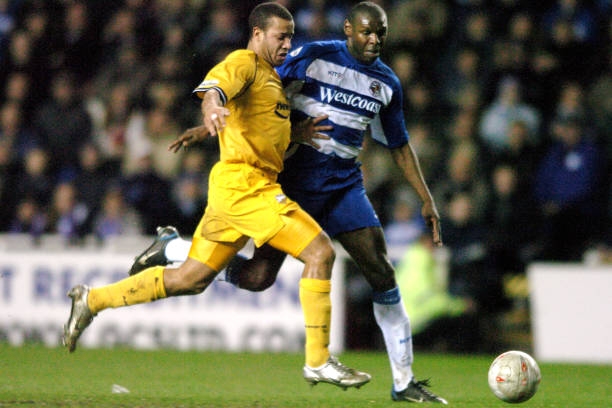
The progress did not continue uninterrupted.
The following two seasons were shaped less by selection than by recovery. A severe hamstring injury limited his involvement during the 2003–2004 campaign, and a stress fracture the following year required an extended rehabilitation period. For a player still early in his professional development, the timing was costly. Momentum stalled.
When Mears finally returned to sustained fitness, his role became clearer. By the 2005–2006 season, he had reclaimed a regular place in Preston’s lineup, making 39 appearances and settling into the role of a reliable Championship fullback. His contribution did not depend on reinvention or positional change. It came from being available, from meeting the league’s physical demands week after week, and from doing his job consistently.
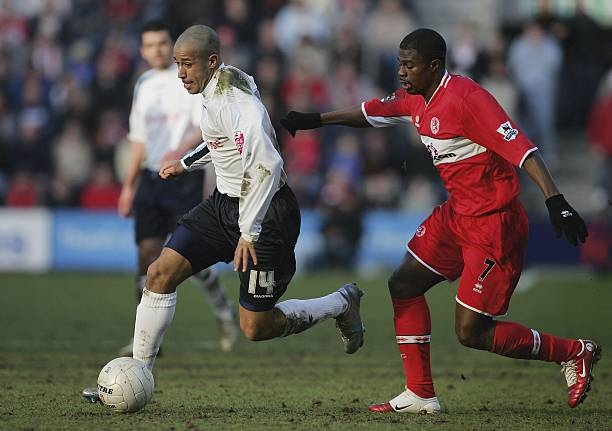
Those years at Preston did not produce headlines, but they did produce credibility. Mears emerged as someone clubs could plan around once healthy. It would shape the rest of his career.
Derby County and the Marseille Decision
In July 2006, Mears moved to West Ham United, stepping into the Premier League after several seasons of steady work in the Championship. The move reflected how he was being valued at that stage of his career - not as a breakout player, but as a reliable, physically capable fullback suited to the demands of top-flight football. Opportunities at West Ham proved limited amid managerial turnover, and by January 2007 he joined Derby County on loan.
Derby was a better fit.
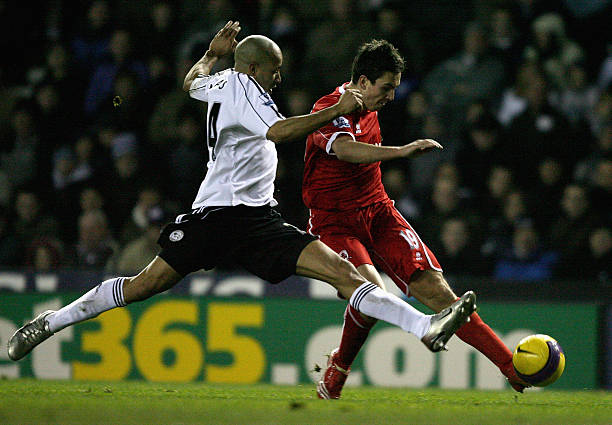
Mears became a regular part of a side pushing for promotion, offering pace and stability on the right flank during the second half of the 2006–2007 season. Derby secured promotion to the Premier League via the Championship playoff final, and Mears’ role in that run prompted the club to make his move permanent soon after.
Davies made his assessment clear at the time of the signing.
“We are delighted to complete this deal because Tye is a very good young full-back with excellent pace and potential. We need him for the challenge ahead and I know he is committed to working hard with us because he has the exciting potential to improve still further.” Billy Davies, Derby Manager, quoted via mcfc.co.uk
Derby’s return to the Premier League was brief and difficult, ending in relegation at the conclusion of the 2007–2008 season. Even so, Mears’ individual performances continued to attract attention beyond England. He found himself under contract at a club heading back to the Championship, while drawing interest from teams operating in a different competitive and financial environment.
That tension came to a head in August 2008.
Olympique de Marseille approached Derby with a proposal that included a trial and the possibility of a loan. Derby rejected the terms outright. The club’s position was made public soon after.
“The faxed offer from Marseille yesterday was for a two-day trial, with the possibility of a free loan. That is completely and utterly unacceptable - in fact it’s laughable. … Both the chairman Adam Pearson and the manager Paul Jewell communicated this to the player directly and to Marseille and made it clear that as the offer stood there would be no deal” Derby County spokesperson, quoted via The Guardian
Mears traveled to France anyway.
At that point, nothing about the move was guaranteed. By leaving England against club instruction while still under contract, Mears strained his relationship with Derby, drew widespread attention in the English press, and left his immediate future unresolved.
Marseille proceeded with the signing later that month.
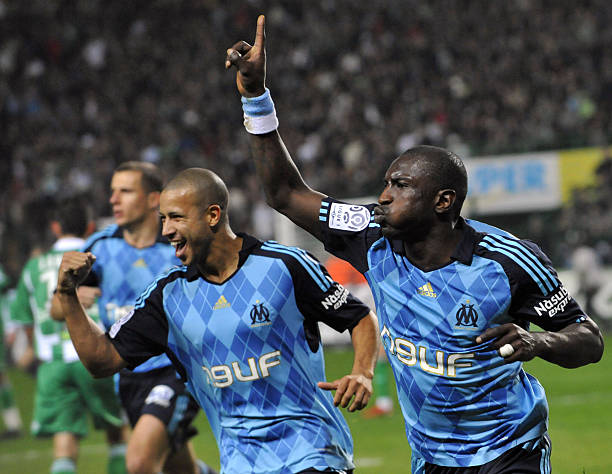
The move carried clear professional risk. Mears was entering a new league, a new tactical environment, and a club with established options in his position, without the security that usually accompanies a permanent transfer. It was not a step taken for comfort or continuity, but for opportunity.
Marseille, Europe, and a Goal That Justifies the Risk
Mears arrived at Marseille without guarantees. The move had resolved the standoff with Derby County, but it had not clarified his place. Marseille were an established European club with expectations shaped by domestic success and continental ambition. For a fullback arriving from a relegated Premier League side, the margin for error was narrow.
The adjustment was uneven. Competition for places limited early opportunities, and minor injury setbacks disrupted continuity during the first half of the season. Mears moved in and out of the lineup as Marseille balanced domestic priorities with European commitments, his role unsettled as the club progressed through multiple competitions.
But that changed in Europe.
During Marseille’s UEFA Cup campaign, Mears found himself in a position to influence the knockout tie against AFC Ajax. With the aggregate score level and the match pushed into extra time, he scored in the 20th minute of extra time, a decisive moment that sent Marseille through to the quarterfinals.
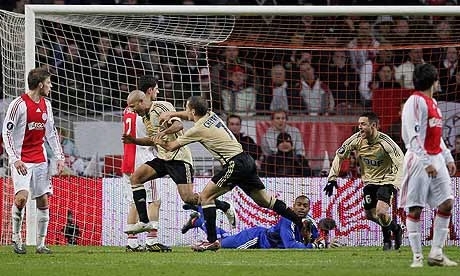
Photograph: Olaf Kraak/AFP/Getty Images
The goal changed his immediate standing at Marseille. In a competition decided by narrow margins, he had contributed directly to a knockout result, doing so at a moment when opportunities had been limited. From that point forward, his place within the squad was no longer defined solely by the circumstances of his arrival.
Marseille’s European run ended in the quarterfinals, but Mears’ time in France settled into something more stable after Ajax. The move did not elevate him into a different tier of player, nor did it transform his role within the club. It did something more practical. It reestablished his credibility after a period of uncertainty, confirming that the decision to leave England had been driven by competitive intent rather than impulse.
From there, the next phase of his career would be shaped less by confrontation and more by continuity.
Consistency as Currency – Burnley and Bolton
Without regular playing time, Mears’ time in France was brief. By the summer of 2009 he returned to England in search of a more settled role. At Marseille, competition for places and rotation limited his opportunities, and his next move reflected a preference for regular involvement rather than circumstance.
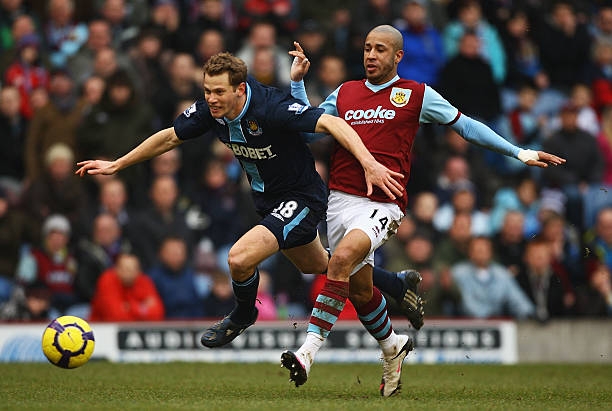
That opportunity came at Burnley, newly promoted to the Premier League ahead of the 2009–2010 season. Facing the demands of survival, the club leaned heavily on players capable of handling the league’s physical and tactical grind. Mears started all 38 league matches, providing continuity at right back during a campaign defined by pressure rather than margin.
Operating from the right side of the back line, Mears was a consistent attacking outlet, finishing the season with six league assists. When Burnley were relegated at the end of the campaign, his role did not diminish. In the 2010–2011 Championship season, he remained a regular presence, increasing his assist total as the club worked to reestablish itself after the drop.
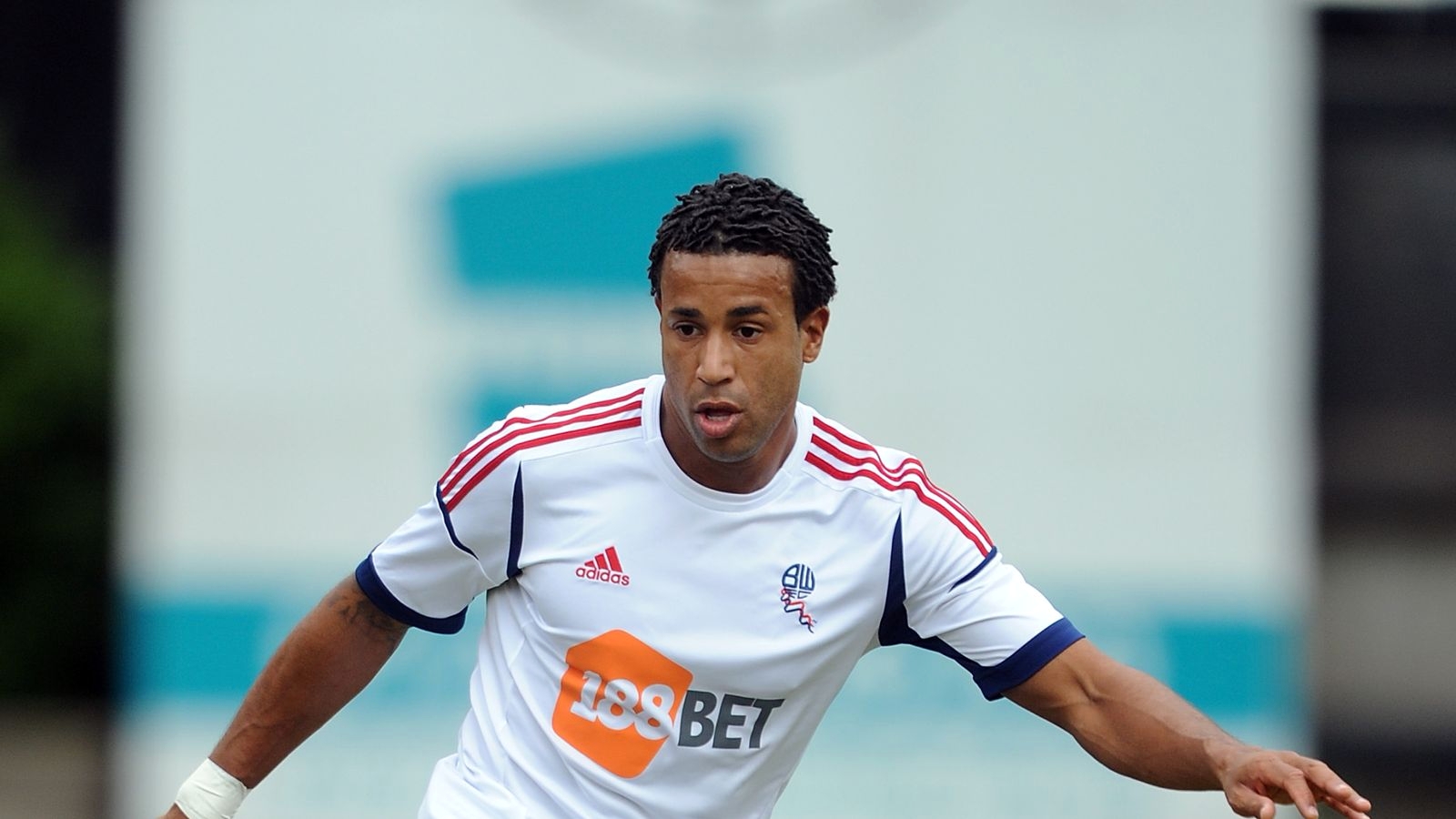
In 2011, Mears signed ofr Bolton Wanderers, who were still competing in the Premier League and seeking experience across their defensive line. The move, however, was disrupted early.
During preseason training, Mears suffered a broken leg that sidelined him for much of the 2011–2012 season. The injury removed him from contention during a period of upheaval at the club, as Bolton struggled and were ultimately relegated.
Mears returned to action the following season, with Bolton now competing in the Championship. As he worked back into regular involvement, his appearances were managed, and he featured across the campaign as the club adjusted to life outside the top flight.
From Burnley to Bolton, the pattern was straightforward. When available, Mears played. His selection reflected role clarity more than reputation, and his contributions were shaped by expectation rather than experimentation.
When interest later emerged from North America, it followed seasons in which Mears had remained part of the professional rhythm of the English game. The move that followed marked a change of setting, not a break from form.
Why MLS Made Sense When It Did - Winning Without Being the Headline
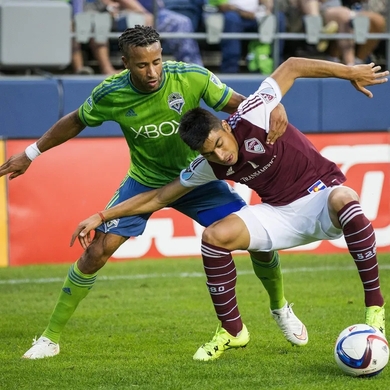
The Sounders lost to the Rapids, 1-0. (Dean Rutz/The Seattle Times)
By the mid-2010s, Mears’ place in European football was clearly defined. He was trusted, experienced, and physically capable, but increasingly used within short-term logic - rotation roles, cover assignments, and contracts shaped by age rather than long-term planning. His ability was established, even as his role became more situational.
When the Seattle Sounders moved on from DeAndre Yedlin following the 2014 season, the club faced an immediate opening at right back in a system that depended on pace, defensive coverage, and the ability to manage transitions over long stretches of play.
Mears joined Seattle ahead of the 2015 season, recording an assist on his debut, and started 33 regular-season matches in his first MLS campaign. He logged nearly 3,000 minutes - more than any other Sounders outfield player that year - entering the lineup immediately and remaining there in a role that had been central to the club’s structure.
What separated the move from others like it was how Mears described the league he was entering.
“People think of MLS as a retirement league, but it’s not. It’s transitional. You have to be fit. If you switch off, you get punished.” Tyrone Mears, Seattle Sounders interview
Mears arrived in MLS after consecutive seasons of heavy use in England, moving directly from one full competitive cycle into another. The league did not lower the demands placed on him; it expanded them across travel, compressed schedules, and repeated transitional phases that left little room for managed pacing.
Across the 2016 season, tactical approaches shifted around him, but his role did not. He occupied the same defined position and met the same physical and positional expectations that had been placed on him since his arrival.
The year ended in the 2016 MLS Cup Final against Toronto FC. Mears played the full 120 minutes. He was selected not to decide the match, but to endure it - trusted to remain functional deep into a game shaped by constraint, discipline, and fatigue.
MLS made sense when it did because it asked precisely that of him. It offered a league and a role where experience was not managed cautiously or deployed situationally, but used fully. For Mears, it was not a departure from his career pattern. It was its continuation.
Atlanta United
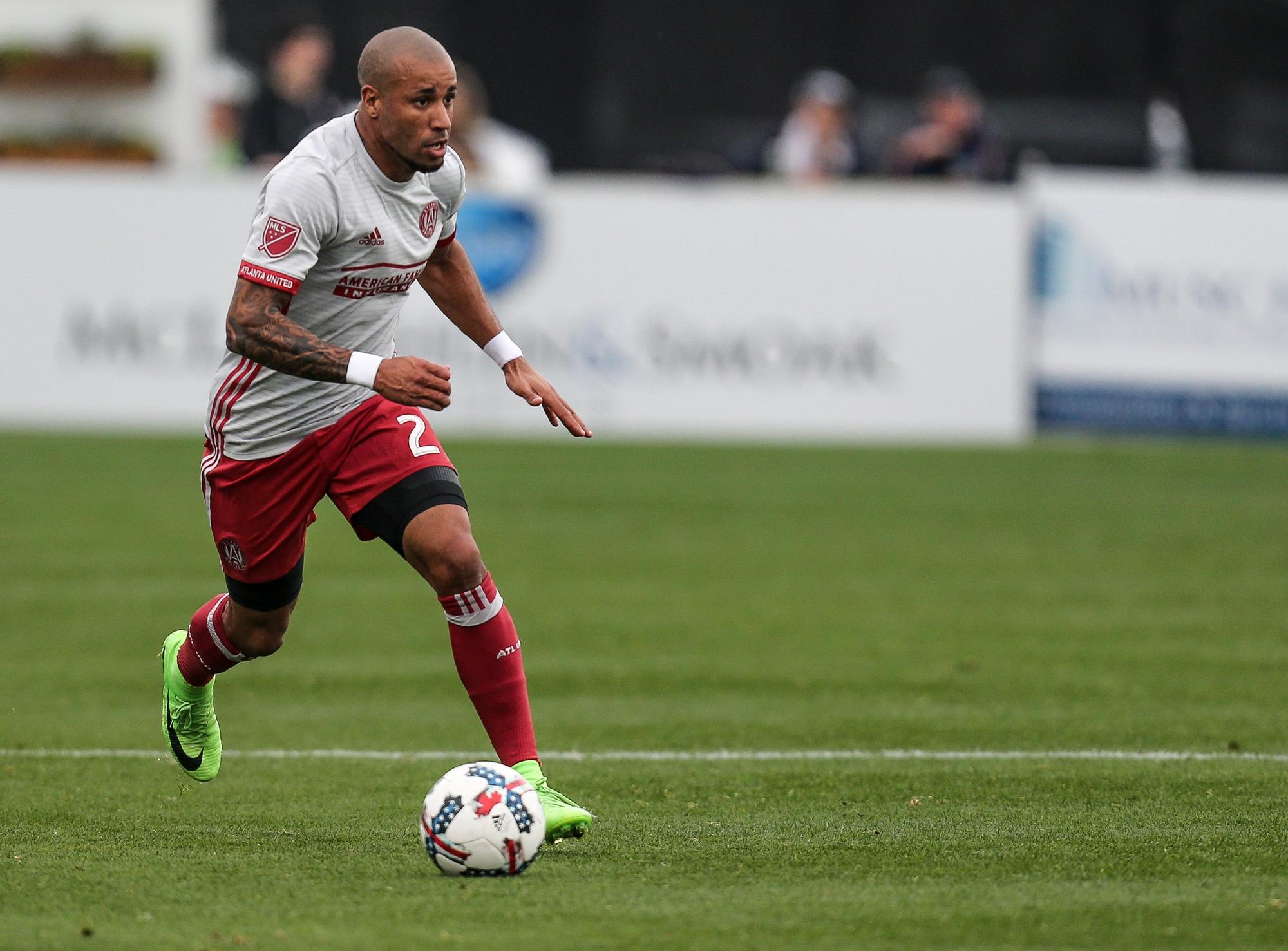
When Atlanta United FC entered Major League Soccer in 2017, its first roster leaned heavily on defensive stability, creating room for attacking signings to operate. Mears arrived in Atlanta to serve that stabilizing role.
He came with recent MLS experience and a working familiarity with the league’s rhythms. There was no positional learning curve to manage, no adjustment period required. For an expansion side navigating new travel demands, shifting lineups, and the accumulation of small margins, that understanding carried immediate value.
His minutes reflected a practical role rather than a central one. Mears was part of the matchday picture, asked to step in when required and to do so without altering the team’s approach. As the season progressed and Atlanta’s preferred group became clearer, his involvement narrowed.
His time with the club lasted a single season. That season in Atlanta fit cleanly within the broader arc of his career. He arrived with experience, filled the role he was brought in to perform, and moved on as the club continued to reshape its roster.
Preparing for What Came Next
While still playing, Mears began laying groundwork beyond the pitch. During his time in MLS, he enrolled in Southern New Hampshire University, taking coursework in criminal justice alongside his playing schedule. The decision was made quietly. There was no indication that retirement was imminent - only an acknowledgment that playing careers end in due course.
After his season in Atlanta, Mears continued playing in MLS with Minnesota United, before returning to England to finish his playing days with West Bromwich Albion.
The education did not stop there. In 2022, Mears added a graduate credential more directly connected to the direction his career was taking, completing a Masters in Sports Directorship through Manchester Metropolitan University - a two-year, executive-level program designed around the modern sporting director role, with its mix of governance, leadership, and commercial responsibility.
As his playing career moved toward its conclusion, Mears also pursued coaching qualifications, working toward the UEFA A License, while spending time inside coaching environments. He returned to the Manchester City Academy, this time observing and working within the system rather than progressing through it. That exposure was followed by roles with the Inter Miami CF Academy and NCE Soccer, where the focus was on development and structure rather than first-team results.
Fort Lauderdale United FC

Mears’ move into senior leadership took shape in South Florida.
In early 2024, he was appointed head coach of the women’s professional team at Fort Lauderdale United FC, a new organization competing in the USL Super League. Mears’ appointment was seen as a major coup for the league, bringing Premier League and MLS Cup experience to the touchline. The role placed him inside a club still establishing its operational footing, where early decisions would shape standards, staffing, and daily structure as much as results on the field.
“I’m incredibly excited to be chosen to lead at Super League Fort Lauderdale, a fresh and inspiring chapter in women’s professional soccer. My journey in football, rich with diverse experiences, has perfectly set the stage for this new challenge. We’re not just starting a soccer team in Fort Lauderdale; we’re building a community for women athletes who’ve long awaited this opportunity.” Mears, bocaratontribune.com
The appointment emphasized process as much as performance. Mears was responsible not only for match preparation, but for building routines and expectations that could support a professional environment from the ground up. The work resembled earlier phases of his career more than a traditional coaching ascent - less about imprinting identity, more about making systems function.
That broader responsibility became formalized the following year. In September 2025, Mears was promoted to President of Soccer, expanding his role from the technical area to oversight of the club’s sporting direction. The position placed him in charge of long-term planning across both the women’s program and the club’s future men’s team.
“I’m thankful for my time as head coach and everything I learned working with our incredible players and staff. Now, in this new role, I’m excited to help guide both our men’s and women’s professional programs and continue building the club’s future.” Mears, ftlutd.com
One of the first major decisions under that expanded remit was structural rather than competitive. Fort Lauderdale United announced that the launch of its men’s professional side would be delayed to 2027, citing the need to strengthen infrastructure and foundations before entering competition. The choice prioritized readiness over speed, emphasizing sustainability over timetable.
Taken together, the progression reflected a familiar pattern. Mears moved from preparation into responsibility by way of accumulated experience - as a player who had operated inside multiple systems, and as a coach who had spent time observing how those systems were built. At Fort Lauderdale United FC, that background translated into stewardship rather than reinvention.
For those interested in seeing the environment Mears is now helping build, Fort Lauderdale United FC is based roughly 20 minutes south of Inter Miami’s Chase Stadium. Current schedules, venues, and club information are available at FTLUTD.com.
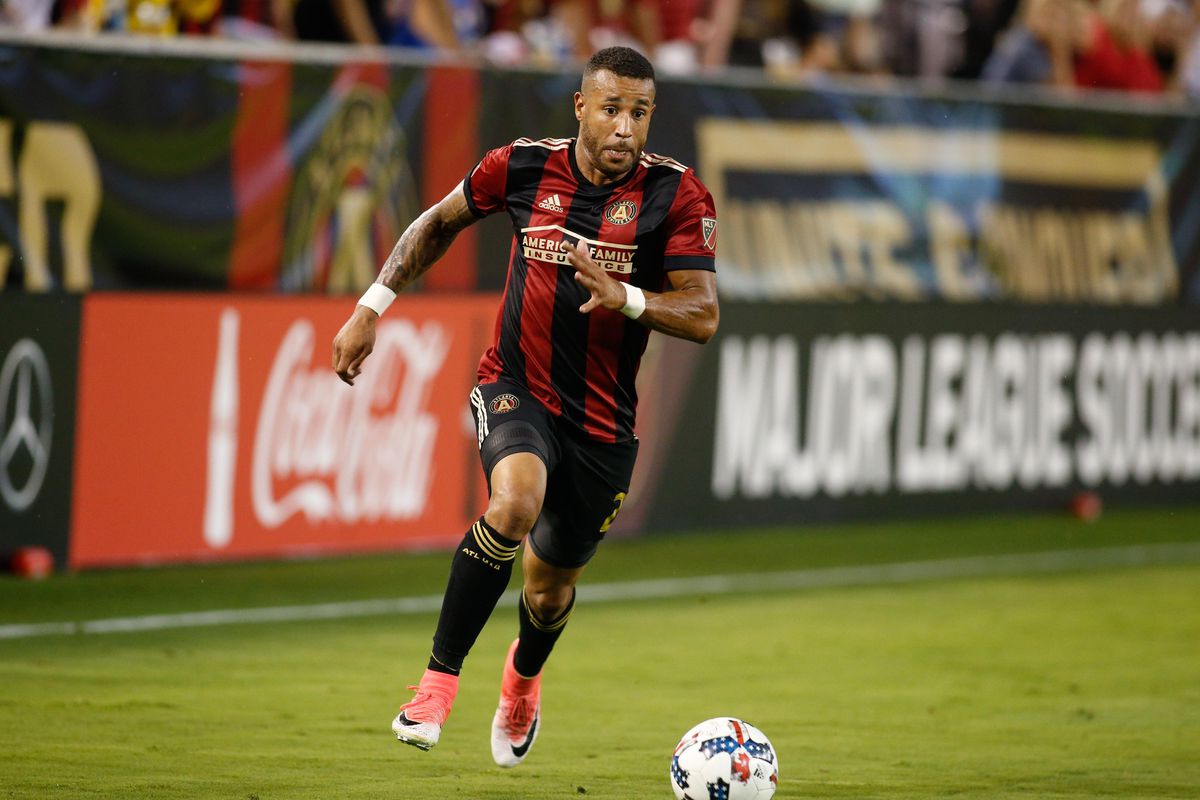
Career Stats
- Seasons: 17
- Countries: 3
- Clubs: 11
- Leagues: 4
- Matches: 336
- Starts: 294
- Minutes: 27,054
- Goals: 12
- Assists: 15
- Yellow Card: 50
- Red Cards: 1
Tyrone Mears played in 22 games for ATLUTD, scoring 1, assisting 1.









ATLUTD VIPs ATLUTD · PLAYERS · RETIRED
ATLUTD